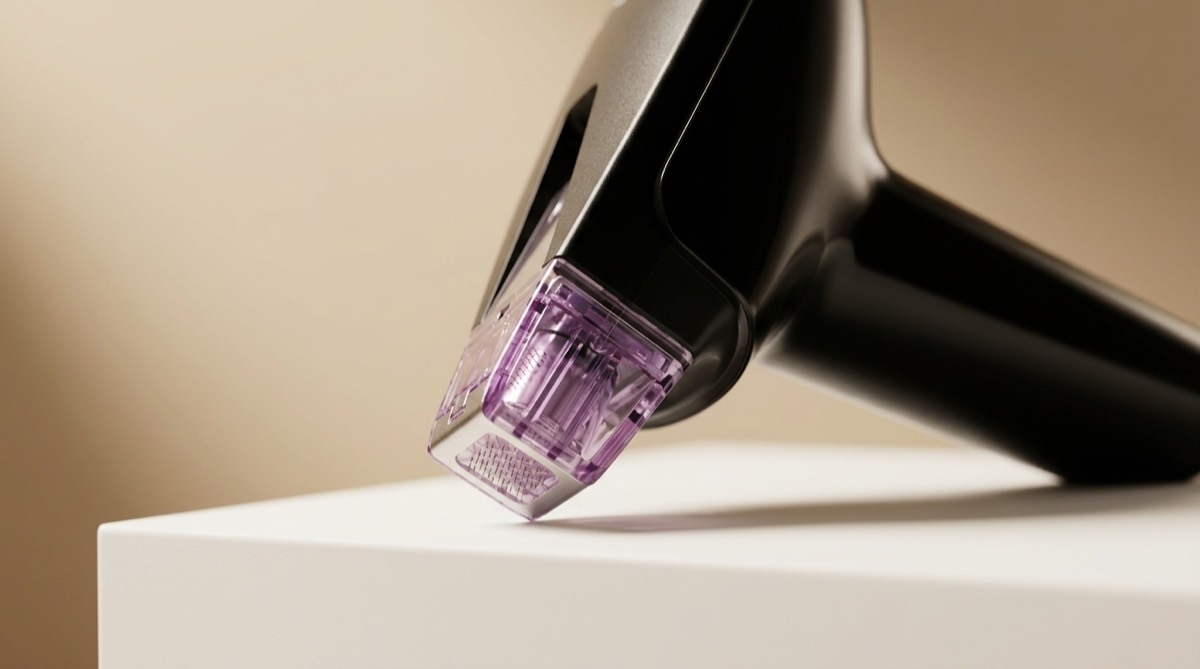
The mechanism difference (RF makes everything else change)
Traditional microneedling is mechanical. A pen or roller drives a cluster of fine needles into the skin to a depth of roughly 0.5 to 2.5mm — through the epidermis and into the upper dermis. Each pinprick is a controlled micro-injury, and the body responds by producing new collagen and elastin to heal the channels. The result is surface refinement: smoother texture, smaller-looking pores, brighter tone.
Morpheus8 starts the same way — a grid of fine pins penetrates the skin — but adds a second variable: bipolar radiofrequency energy delivered through the tip of each pin. The needle is the delivery mechanism; the RF is the actual treatment. That energy heats the dermis and, on the face, the subdermal fat at depths up to 4mm, denaturing collagen fibers and stimulating a remodeling response several layers below where microneedling alone can reach.
This single change — adding controlled thermal energy below the surface — is what turns a texture treatment into a structural one. The needles are not the point. The heat is.
What each treats well (and what each doesn't)
The clearest way to choose is to match the treatment to the layer where your concern actually lives.
Microneedling is the right tool for:
- Mild surface texture — fine lines, uneven smoothness, dullness.
- Enlarged pores — particularly on the cheeks and T-zone.
- Shallow acne scarring — rolling scars and superficial atrophic scars.
- Surface pigmentation — when paired with topical brightening agents.
- Maintenance between heavier interventions like Morpheus8 or resurfacing lasers.
Morpheus8 is the right tool for:
- Skin laxity — early jowls, jawline softening, neck crepiness, brow descent.
- Deeper acne scarring — ice-pick and boxcar scars that microneedling alone cannot reach.
- Submental fullness — when treated with the Body or Burst tip at depth.
- Stretch marks and crepey body skin — particularly on the abdomen, arms, and inner thighs.
- Pre-surgical alternative — for patients in their 30s and 40s who want to defer a facelift by 5-10 years.
If your concern is in the top column, you are overspending if you choose Morpheus8. If your concern is in the bottom column, microneedling will quietly underdeliver and you will end up paying for both.
Downtime and recovery comparison
Recovery time tracks the depth of treatment, which tracks the energy delivered. More depth and more energy means more visible repair.
| Recovery Window | Microneedling | Morpheus8 |
|---|---|---|
| First 24 hours | Pink flush, mild swelling, feels like a mild sunburn. | Visible sunburn-like redness, swelling, pinpoint marks from RF pins. |
| Day 2-3 | Usually camouflage-able with mineral makeup. | Faint flush, pinpoint marks fading; makeup possible by hour 48. |
| Day 4-7 | Back to normal; possible mild peeling. | Looking normal; collagen remodeling underway internally. |
| Weeks 2-12 | Texture improvements appear gradually. | Tightening and structural change build over 3-6 months. |
Both treatments require sun avoidance, no retinoids for 5-7 days, and no aggressive workouts for 24-48 hours. Morpheus8's recovery is longer because it is doing more — repair is happening in tissue that microneedling never reaches.
Treatment depth: where the difference actually shows up
Skin is not one thing. It is layered — epidermis on top (about 0.1mm), papillary dermis below that (roughly 0.3-1mm), reticular dermis (1-3mm), and the subcutaneous fat layer below. Each layer holds different structures: pigment in the upper epidermis, collagen and elastin in the dermis, fat and fibrous bands in the subcutis.
Surface microneedling reaches the upper dermis at most — roughly the depth where pigmentation and surface texture issues live. That is why it works well for these concerns and why it stops there. Morpheus8 reaches up to 4mm on the face and up to 8mm on the body with the dedicated body tip. At 4mm you are inside the reticular dermis, near the subcutaneous interface — the structural support layer where laxity, deep scarring, and submental fullness actually occur. The depth is the difference.
This is also why a "deep" microneedling pen (some go to 2-2.5mm) is still not equivalent to Morpheus8. The needle depth alone does not produce the thermal remodeling response that bipolar RF energy delivers below the surface. More needle length without RF is just more pinprick.
Pricing comparison
The price difference between microneedling and Morpheus8 is real and proportional to the technology involved.
| Treatment | Per Session | Typical Plan |
|---|---|---|
| Traditional Microneedling | $150 - $400 | 4-6 sessions, monthly: $600 - $2,400 |
| Morpheus8 Face | From $800 | 3-5 sessions: $2,400 - $4,000 |
| Morpheus8 Face + Neck | From $1,200 | 3-5 sessions: $3,600 - $6,000 |
You are not paying 4x for a better needle. You are paying for an FDA-cleared bipolar RF device, single-use sterile tips, and a treatment depth that pure microneedling devices cannot reach. For a full breakdown of what drives Morpheus8 pricing variance, see our Morpheus8 cost guide.
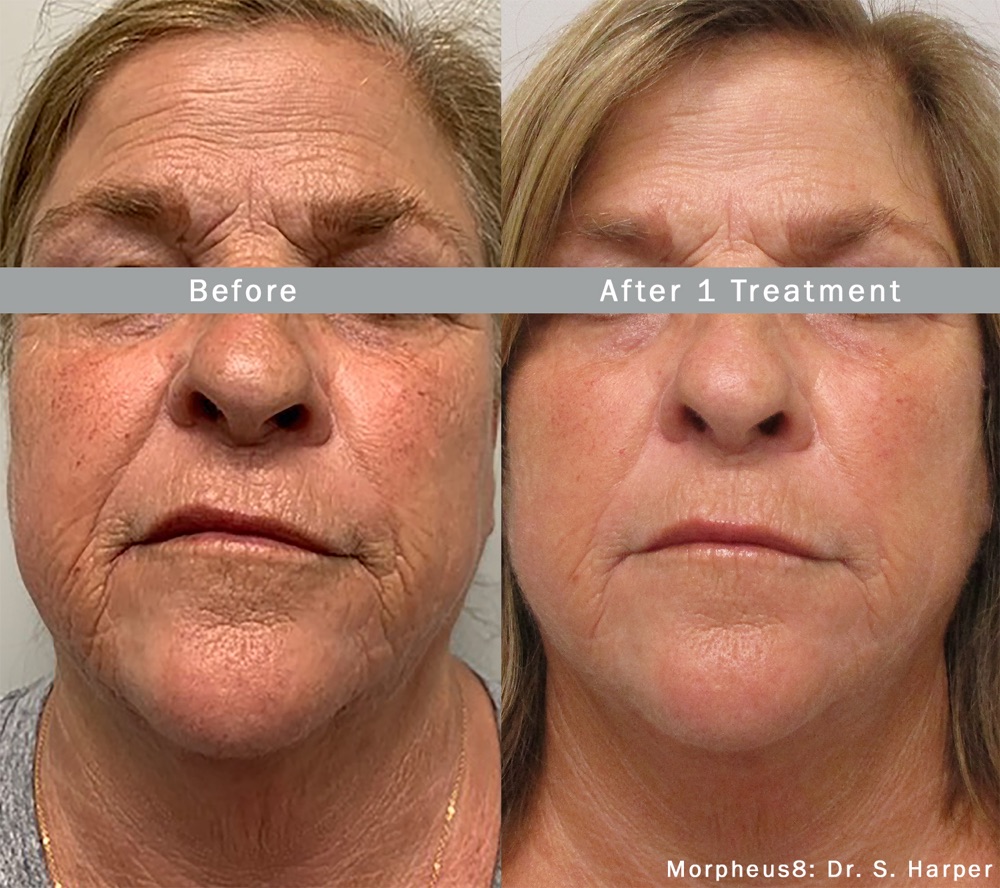
Not sure which is right for you?
Our $50 telehealth consult is the cheapest way to find out. If microneedling is the right tool, we will tell you. If Morpheus8 is the right tool, we will build the protocol. Either way, the $50 fee is credited to your first treatment.
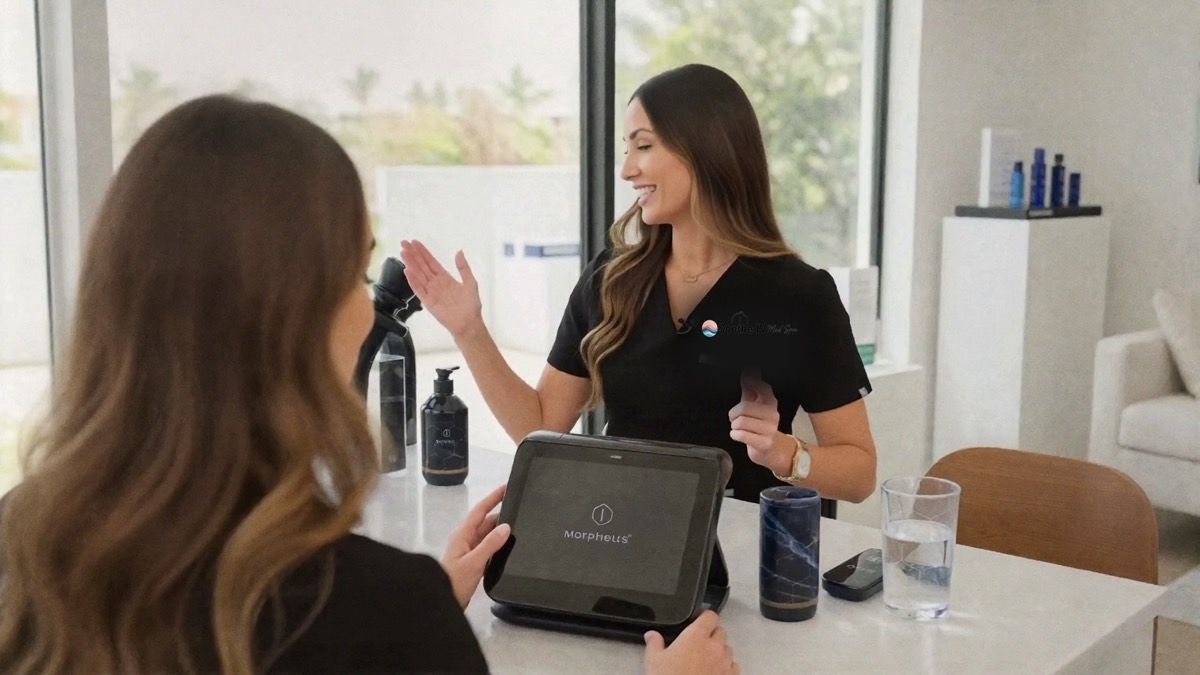
Who should choose which
A few quick patient profiles to anchor the decision.
Choose microneedling if: you are in your 20s or early 30s, your concern is surface (pores, mild scarring, dullness), you want a low-downtime maintenance treatment you can repeat every 4-6 weeks, and your budget is under $500 per session. You will get a real result for the right concern.
Choose Morpheus8 if: you are in your 30s, 40s, 50s, or 60s with early-to-moderate laxity, you have deeper scarring that microneedling has not improved, you want structural change rather than surface refinement, and you are willing to invest in a 3-5 session plan to see cumulative remodeling. Most Soothe IV Morpheus8 patients are Anti-Ager personas — people who are not ready for surgery but are not satisfied with topical skincare either.
Choose both, sequenced, if: you have multiple concerns at different depths, you have time and budget for an annualized plan, and you want to maintain Morpheus8 results between sessions. Your provider should design the schedule — never stack them in the same week.
How to decide if you're not sure
If you are still on the fence after reading this, the diagnostic question is not "which treatment do I want?" — it is "how deep does my concern actually go?" Pull your skin gently along the jawline. If it snaps back instantly and your concern is purely surface, microneedling is the answer. If it lingers for a moment and the texture you see is paired with mild sagging, you are looking at a Morpheus8 conversation.
An honest provider will tell you when you are overspending. At Soothe IV, the telehealth consult is structured around that conversation. Ian K. Tseng, MD, our Medical Director, reviews your skin, history, and goals on a 20-30 minute video visit and tells you what tool actually fits — including a referral out if Morpheus8 is not the right call. The $50 consult fee is credited to your first treatment.
The wrong treatment at the right price is still the wrong treatment. The right one — for the right concern — is the entire point.